IT security for the healthcare
One of the first sectors to be targeted by cyber-attacks
The reality in the healthcare sector
You work with sensitive data every day: patient records, appointments, communications. This involves certain regulations: the GDPR, and in the healthcare sector, NEN 7510 as well.
At the same time, you often don’t have your own IT department. Your colleagues are healthcare professionals, not techies. Laptops and phones are taken home, to different locations, and to patients. A new employee must be able to get to work on day one, securely and without any hassle.
If anything goes wrong with that data, it will undermine your patients’ trust. And that is exactly what healthcare is all about.
Where the problems lie in practice
Challenges that almost every healthcare organisation recognises
No in-house IT team, but still liable
Your colleagues are healthcare professionals. Technical and security issues tend to get in the way, even though the rules do apply to you.
Devices you can take with you wherever you go
Laptops and mobile phones are taken home, to various locations and to patients. Even a single lost device can expose patient data.
A new colleague who needs to be productive straight away
On day one: an account, the right apps and the right permissions. Secure and without having to wait for days.
Demonstrable compliance with NEN 7510 and the GDPR

You know it’s necessary. Whether you actually do it, and how you go about it, is another matter.
It all depends on one person
One colleague handles the IT on the side, or one supplier knows how it all works. If they’re no longer available, the search begins.
Keeping track of IT costs
Expenditure is spread across various suppliers and contracts. It is difficult to work out exactly how much you spend each year, and on what.
Tackling these challenges requires more than just technology.
It requires a partner who understands how healthcare organizations operate and the risks that executives face.
The risks listed below
Where things usually go wrong
What these four have in common is that they only become noticeable when something goes wrong or when the auditor asks about them. And when the technology stops working, care stops as well. All four can be addressed without turning your organization upside down.
How it works
In five steps, without having to turn it into a major project
What you get from us
We tailor the technology to the way you work, so that your team can focus on providing care rather than on the system.
Greater certainty regarding the protection of patient data
Managing risks and compliance
Support with NEN 7510 audits and certification
Reduced reliance on individual staff members or suppliers
A stable and secure digital working environment
More focus on healthcare provision and less on IT concerns
Who is 2source4?
We support healthcare organisations in creating a secure and future-proof digital working environment.
We do this by identifying risks, implementing improvements in a pragmatic manner, and supporting organisations in maintaining control over information security and compliance.
No complicated processes or theoretical reports – just a practical approach that is tailored to the day-to-day reality of the healthcare sector.
You can get technology anywhere. The difference lies in how well it suits the way you work.
Microsoft Solutions Partner
As a Microsoft Partner, our team knows all the ins and outs of Microsoft technology. We know how to deliver the best solutions to suit your business.
Certifications
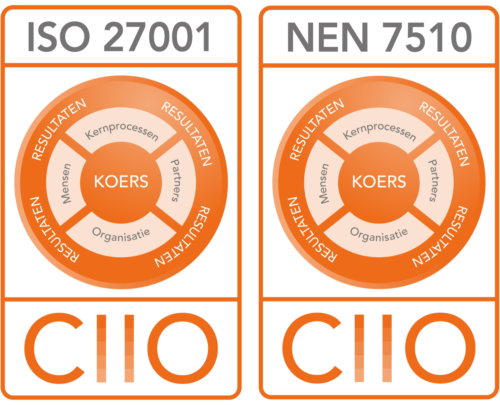
ISO 27001 | NEN 7510
To demonstrate that information security and the protection of sensitive data are our top priorities, we have obtained ISO 27001 and NEN 7510 certification.
What does this mean for our customers?
- ISO 27001: Internationally recognised, this standard ensures that our information security processes are structured, effective and in line with global best practice.
- NEN 7510: Specifically for the healthcare sector in the Netherlands, this standard confirms our ability to protect personal and sensitive data in accordance with local regulations.
A partner for today and tomorrow
Organisations that already place their trust in us
Software that automates administrative tasks in the healthcare sector, serving more than 10,000 healthcare professionals at hospitals and mental health care institutions. Based in Utrecht.
Outreach youth support and parenting support for children, young people and their parents. Support workers carry out their work on a daily basis in families’ homes across North Holland, South Holland, Utrecht and the Amsterdam region.
Forensic psychiatry for people with severe mental health problems within the criminal justice system. Clinic in Venray, with branches in Roermond, Helmond, Sittard and Maastricht, amongst other places.
No-obligation consultation
Let’s have a quick chat about
your healthcare organisation’s IT?
No sales pitch. Just a chat about where you’re at right now and what could be improved.
You can book an appointment with one of our IT specialists straight away.
A no-obligation chat with an expert?
Luuk van den Ende
Curious to see how this works in practice?
Luuk would be happy to help you work through it.
Not ready for a chat just yet?
Why not take a moment to read through how it works first? In the white paper “Enterprise security within reach for SMEs”, you can find out what a security team does for you round the clock, and why this is also achievable for an organisation without its own IT department.
FAQ
If your question is not listed, feel free to contact one of our IT specialists.
Does our healthcare organisation need to comply with NEN 7510?
If you work with patient data, NEN 7510 is the expected standard for information security in the healthcare sector. We help you comply with this standard in your day-to-day work.
Does our healthcare organisation fall under NIS2?
NIS2 is a European directive that tightens cybersecurity requirements across a wider range of sectors, including the healthcare sector. Whether your organisation is directly covered by it depends on its type and size. For many smaller practices, the GDPR and NEN 7510 are the main regulations that apply. Not sure where you stand? In a no-obligation consultation, we’ll work with you to determine what applies to you and what it would be wise to put in place now.
Do we need our own IT expertise?
No. In fact, we’re here to help organisations that don’t have their own IT department. Your colleagues can focus on patient care; we’ll take care of the technical side.
Who might find this interesting?
This approach is suitable for healthcare organisations that handle patient data but do not have their own IT department. Examples include:
- GP practices and health centres
- Dental and oral care practices
- Mental health care organisations
- Home care and care for the elderly
- Rehabilitation and treatment centres
Does this sound familiar?
- Your IT is managed by various different organisations, and nobody is keeping an eye on the big picture.
- You’re not sure whether you comply with NEN 7510 and the GDPR.
- In the event of a fault or incident, there is no one to take immediate action.
Do any of these points sound familiar? If so, a no-obligation chat is a good place to start.
How much does this cost, roughly?
That depends on the size of your organisation and what you need. We always start with a free assessment. MDR protection is provided for a fixed monthly fee, which is a fraction of the cost of having your own security team (around €250,000 per year).
Does this work for a small practice as well?
Yes. We implement the security measures in phases and ensure they grow alongside your organisation.
What happens in the event of a data breach?
If a suspicious situation arises, the security team intervenes immediately and isolates the affected system. An analyst then investigates what has happened, and you receive a clear report, which is also provided to your board.
How does MDR protect against insider threats?
MDR utilises User & Entity Behaviour Analytics (UEBA) technology to detect and prioritise anomalous behaviour amongst staff, thereby preventing human error and insider threat issues.MDR utilises User & Entity Behaviour Analytics (UEBA) technology to detect and prioritise anomalous behaviour amongst staff, thereby preventing human error and insider threat issues.
How often are the technology and processes updated?
We continuously update our MDR tools and processes to stay ahead of emerging threats and protect your organization from evolving cyber-attacks.